
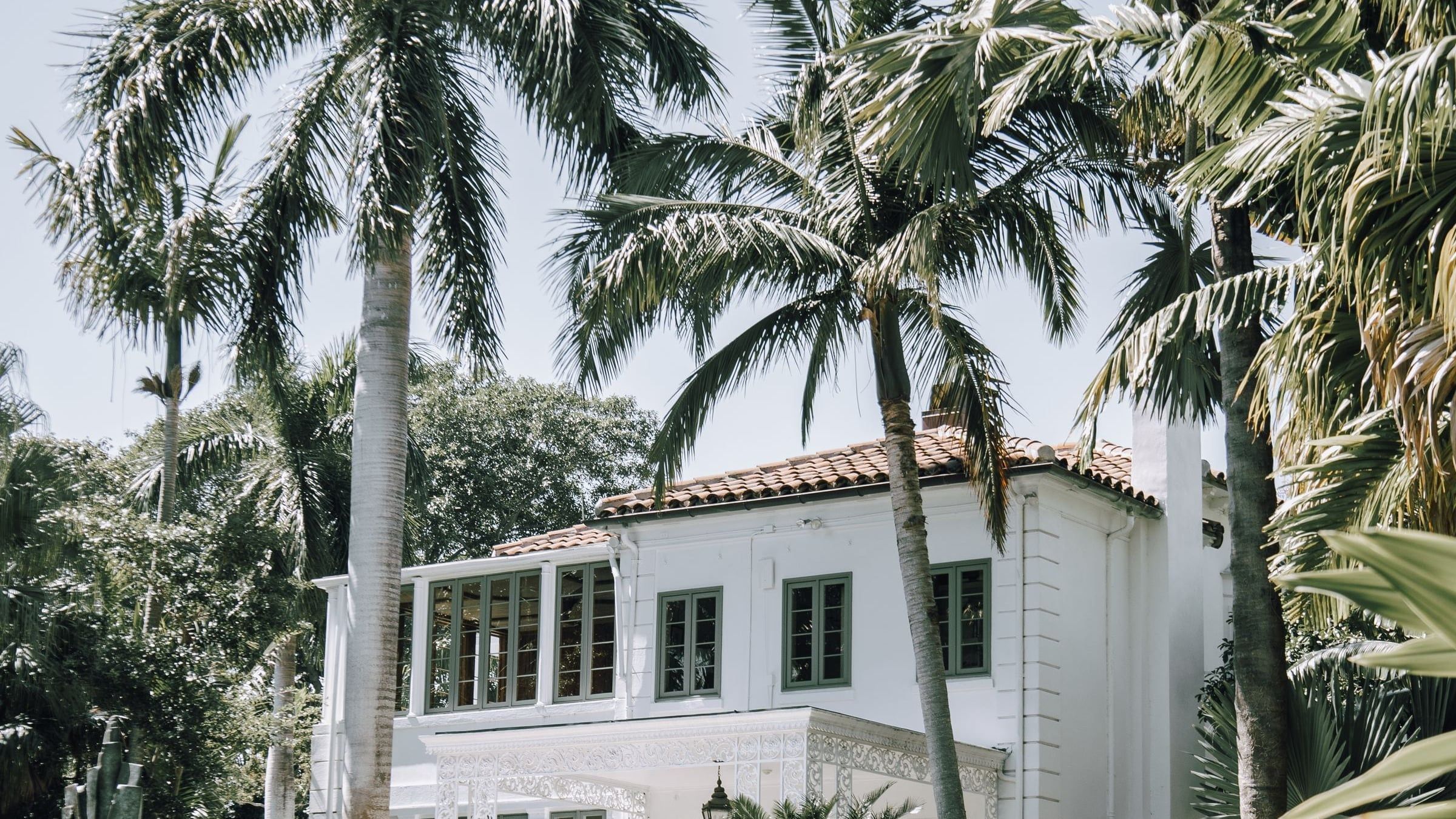
An empty house in South Florida doesn’t suffer much from heat. It suffers from humidity: mold, mildew and musty smells that start when moisture builds up with nobody running the air conditioning. The University of Florida’s extension service publishes a guide for exactly this, Closing Your Seasonal Home, and most of this checklist follows it.
Air conditioning and humidity
The U.S. EPA recommends keeping indoor relative humidity below 60%, ideally between 30% and 50%, to prevent mold.
UF/IFAS advises leaving the A/C on, set no higher than 85°F, so it cycles and keeps removing moisture. Above that, it says, indoor humidity can rise past 55–60%. You don’t need to keep the house cool, just dry. It also recommends:
- Have the A/C professionally serviced about three weeks before you leave, with the humidistat calibrated.
- Change the filter and clean the condensate line before you go.
Because the A/C is doing the most important job while you’re away, someone should check regularly that it’s running.
Water
UF/IFAS suggests:
- Turn off the main water shutoff (at the meter or where the line enters the house) unless you need it for irrigation, so a burst pipe can’t flood the house.
- Turn off the supply to the clothes washer.
- For the water heater, turn off its power and set it to its lowest setting. Never leave it powered with the water shut off: if the tank drains, the heating elements can burn out. For a gas water heater, use the vacation or pilot setting as the manufacturer directs.
- Put stoppers in drains and cover toilets with plastic wrap, so the water in the traps doesn’t evaporate and let in sewer gas and pests.
Refrigerator and freezer
Either empty, unplug and prop open the refrigerator and freezer, or, if you leave them on, remove perishables. UF/IFAS suggests leaving a bag of ice cubes in the freezer. If you come back to a solid block, the power was off long enough to melt and refreeze it, and the contents should go.
For outages generally, FoodSafety.gov says a closed refrigerator keeps food safe for about 4 hours, a full freezer about 48 hours (24 if half full), and perishables above 40°F for more than 2 hours should be thrown out.
Pests, the pool and appliances
- A clean, dry house, with food thrown out or sealed, gives pests less reason to move in.
- Remove standing water outdoors to avoid breeding mosquitoes.
- Don’t drain the pool, which can damage it. UF/IFAS suggests having a pool service check it every 7 to 10 days.
- Unplug appliances and electronics you won’t be using, to protect them from power surges during storms. Leave the A/C and thermostat, any dehumidifier, the alarm, leak or humidity sensors, Wi-Fi, irrigation timer and a refrigerator you’re leaving on plugged in.
Insurance and your association
Read your homeowner’s or condo policy before you leave, including the fine print on theft coverage, and ask your insurer whether the policy has conditions for a home left empty for long periods. Leave your contact details with a neighbor and your association, and find out what the association maintains while you’re away.
Who does the work
Some of this, like changing an A/C filter, anyone can do. Under Florida rules, paid work such as replacing a water heater or repairing a pool pump requires a licensed contractor. A home watch service checks the house and reports what it finds; it doesn’t replace your A/C company, plumber or pool service.